Welcome to Subscribe On Youtube
637. Average of Levels in Binary Tree
Description
Given the root of a binary tree, return the average value of the nodes on each level in the form of an array. Answers within 10-5 of the actual answer will be accepted.
Example 1:
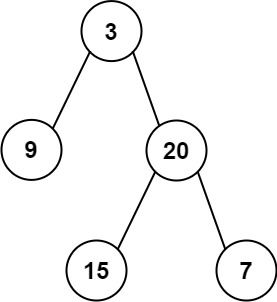
Input: root = [3,9,20,null,null,15,7]
Output: [3.00000,14.50000,11.00000]
Explanation: The average value of nodes on level 0 is 3, on level 1 is 14.5, and on level 2 is 11.
Hence return [3, 14.5, 11].
Example 2:
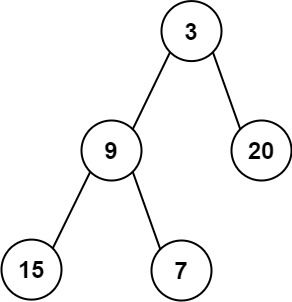
Input: root = [3,9,20,15,7]
Output: [3.00000,14.50000,11.00000]
Constraints:
- The number of nodes in the tree is in the range
[1, 104]. -231 <= Node.val <= 231 - 1
Solutions
Solution 1: BFS
We can use the Breadth-First Search (BFS) method to traverse the nodes of each level and calculate the average value of each level.
Specifically, we define a queue $q$, initially adding the root node to the queue. Each time, we take out all the nodes in the queue, calculate their average value, add it to the answer array, and then add their child nodes to the queue. Repeat this process until the queue is empty.
The time complexity is $O(n)$, and the space complexity is $O(n)$. Here, $n$ is the number of nodes in the binary tree.
Solution 2: DFS
We can also use the Depth-First Search (DFS) method to calculate the average value of each level.
Specifically, we define an array $s$, where $s[i]$ is a tuple representing the sum of node values and the number of nodes at the $i$-th level. We perform a depth-first search on the tree. For each node, we add the node’s value to the corresponding $s[i]$ and increment the node count by one. Finally, for each $s[i]$, we calculate the average value and add it to the answer array.
The time complexity is $O(n)$, and the space complexity is $O(n)$. Here, $n$ is the number of nodes in the binary tree.
-
/** * Definition for a binary tree node. * public class TreeNode { * int val; * TreeNode left; * TreeNode right; * TreeNode() {} * TreeNode(int val) { this.val = val; } * TreeNode(int val, TreeNode left, TreeNode right) { * this.val = val; * this.left = left; * this.right = right; * } * } */ class Solution { public List<Double> averageOfLevels(TreeNode root) { List<Double> ans = new ArrayList<>(); Deque<TreeNode> q = new ArrayDeque<>(); q.offer(root); while (!q.isEmpty()) { int n = q.size(); long s = 0; for (int i = 0; i < n; ++i) { root = q.pollFirst(); s += root.val; if (root.left != null) { q.offer(root.left); } if (root.right != null) { q.offer(root.right); } } ans.add(s * 1.0 / n); } return ans; } } // Solution 2 /** * Definition for a binary tree node. * public class TreeNode { * int val; * TreeNode left; * TreeNode right; * TreeNode() {} * TreeNode(int val) { this.val = val; } * TreeNode(int val, TreeNode left, TreeNode right) { * this.val = val; * this.left = left; * this.right = right; * } * } */ class Solution { private List<Long> s = new ArrayList<>(); private List<Integer> cnt = new ArrayList<>(); public List<Double> averageOfLevels(TreeNode root) { dfs(root, 0); List<Double> ans = new ArrayList<>(); for (int i = 0; i < s.size(); ++i) { ans.add(s.get(i) * 1.0 / cnt.get(i)); } return ans; } private void dfs(TreeNode root, int i) { if (root == null) { return; } if (s.size() == i) { s.add((long) root.val); cnt.add(1); } else { s.set(i, s.get(i) + root.val); cnt.set(i, cnt.get(i) + 1); } dfs(root.left, i + 1); dfs(root.right, i + 1); } } -
/** * Definition for a binary tree node. * struct TreeNode { * int val; * TreeNode *left; * TreeNode *right; * TreeNode() : val(0), left(nullptr), right(nullptr) {} * TreeNode(int x) : val(x), left(nullptr), right(nullptr) {} * TreeNode(int x, TreeNode *left, TreeNode *right) : val(x), left(left), right(right) {} * }; */ class Solution { public: vector<double> averageOfLevels(TreeNode* root) { queue<TreeNode*> q{ {root} }; vector<double> ans; while (!q.empty()) { int n = q.size(); long long s = 0; for (int i = 0; i < n; ++i) { root = q.front(); q.pop(); s += root->val; if (root->left) q.push(root->left); if (root->right) q.push(root->right); } ans.push_back(s * 1.0 / n); } return ans; } }; // Solution 2 /** * Definition for a binary tree node. * struct TreeNode { * int val; * TreeNode *left; * TreeNode *right; * TreeNode() : val(0), left(nullptr), right(nullptr) {} * TreeNode(int x) : val(x), left(nullptr), right(nullptr) {} * TreeNode(int x, TreeNode *left, TreeNode *right) : val(x), left(left), right(right) {} * }; */ using ll = long long; class Solution { public: vector<ll> s; vector<int> cnt; vector<double> averageOfLevels(TreeNode* root) { dfs(root, 0); vector<double> ans(s.size()); for (int i = 0; i < s.size(); ++i) { ans[i] = (s[i] * 1.0 / cnt[i]); } return ans; } void dfs(TreeNode* root, int i) { if (!root) return; if (s.size() == i) { s.push_back(root->val); cnt.push_back(1); } else { s[i] += root->val; cnt[i]++; } dfs(root->left, i + 1); dfs(root->right, i + 1); } }; -
# Definition for a binary tree node. # class TreeNode: # def __init__(self, val=0, left=None, right=None): # self.val = val # self.left = left # self.right = right class Solution: def averageOfLevels(self, root: Optional[TreeNode]) -> List[float]: q = deque([root]) ans = [] while q: s, n = 0, len(q) for _ in range(n): root = q.popleft() s += root.val if root.left: q.append(root.left) if root.right: q.append(root.right) ans.append(s / n) return ans # Solution 2 # Definition for a binary tree node. # class TreeNode: # def __init__(self, val=0, left=None, right=None): # self.val = val # self.left = left # self.right = right class Solution: def averageOfLevels(self, root: Optional[TreeNode]) -> List[float]: def dfs(root, i): if root is None: return if len(s) == i: s.append([root.val, 1]) else: s[i][0] += root.val s[i][1] += 1 dfs(root.left, i + 1) dfs(root.right, i + 1) s = [] dfs(root, 0) return [a / b for a, b in s] -
/** * Definition for a binary tree node. * type TreeNode struct { * Val int * Left *TreeNode * Right *TreeNode * } */ func averageOfLevels(root *TreeNode) []float64 { q := []*TreeNode{root} ans := []float64{} for len(q) > 0 { n := len(q) s := 0 for i := 0; i < n; i++ { root = q[0] q = q[1:] s += root.Val if root.Left != nil { q = append(q, root.Left) } if root.Right != nil { q = append(q, root.Right) } } ans = append(ans, float64(s)/float64(n)) } return ans } // Solution 2 /** * Definition for a binary tree node. * type TreeNode struct { * Val int * Left *TreeNode * Right *TreeNode * } */ func averageOfLevels(root *TreeNode) []float64 { s := []int{} cnt := []int{} var dfs func(root *TreeNode, i int) dfs = func(root *TreeNode, i int) { if root == nil { return } if len(s) == i { s = append(s, root.Val) cnt = append(cnt, 1) } else { s[i] += root.Val cnt[i]++ } dfs(root.Left, i+1) dfs(root.Right, i+1) } dfs(root, 0) ans := []float64{} for i, t := range s { ans = append(ans, float64(t)/float64(cnt[i])) } return ans } -
/** * Definition for a binary tree node. * function TreeNode(val, left, right) { * this.val = (val===undefined ? 0 : val) * this.left = (left===undefined ? null : left) * this.right = (right===undefined ? null : right) * } */ /** * @param {TreeNode} root * @return {number[]} */ var averageOfLevels = function (root) { let q = [root]; let ans = []; while (q.length) { const n = q.length; let s = 0; for (let i = 0; i < n; ++i) { root = q.shift(); s += root.val; if (root.left) { q.push(root.left); } if (root.right) { q.push(root.right); } } ans.push(s / n); } return ans; }; // Solution 2 /** * Definition for a binary tree node. * function TreeNode(val, left, right) { * this.val = (val===undefined ? 0 : val) * this.left = (left===undefined ? null : left) * this.right = (right===undefined ? null : right) * } */ /** * @param {TreeNode} root * @return {number[]} */ var averageOfLevels = function (root) { const s = []; const cnt = []; function dfs(root, i) { if (!root) { return; } if (s.length == i) { s.push(root.val); cnt.push(1); } else { s[i] += root.val; cnt[i]++; } dfs(root.left, i + 1); dfs(root.right, i + 1); } dfs(root, 0); return s.map((v, i) => v / cnt[i]); }; -
// Definition for a binary tree node.
// #[derive(Debug, PartialEq, Eq)]
// pub struct TreeNode {
//   pub val: i32,
//   pub left: Option<Rc<RefCell<TreeNode>>>,
//   pub right: Option<Rc<RefCell<TreeNode>>>,
// }
//
// impl TreeNode {
//   #[inline]
//   pub fn new(val: i32) -> Self {
//     TreeNode {
//       val,
//       left: None,
//       right: None
//     }
//   }
// }
use std::rc::Rc;
use std::cell::RefCell;
use std::collections::VecDeque;
impl Solution {
    pub fn average_of_levels(root: Option<Rc<RefCell<TreeNode>>>) -> Vec<f64> {
        if root.is_none() {
            return Vec::new();
        }

        let mut q = VecDeque::new();
        q.push_back(Rc::clone(&root.unwrap()));
        let mut ans = Vec::new();
        while !q.is_empty() {
            let n = q.len();
            let mut sum = 0.0;
            for _ in 0..n {
                let node = q.pop_front().unwrap();
                sum += node.borrow().val as f64;
                if node.borrow().left.is_some() {
                    q.push_back(Rc::clone(node.borrow().left.as_ref().unwrap()));
                }
                if node.borrow().right.is_some() {
                    q.push_back(Rc::clone(node.borrow().right.as_ref().unwrap()));
                }
            }
            ans.push(sum / (n as f64));
        }
        ans
    }
}